
Clinical Trials and
Research Funding

Due to a lack of funding for pediatric and young adult sarcoma cancer research, treatment options have remained unchanged for over 40 years. Our hope is to improve outcomes for young patients by supporting research and clinical trials focused on safer, more effective treatments.
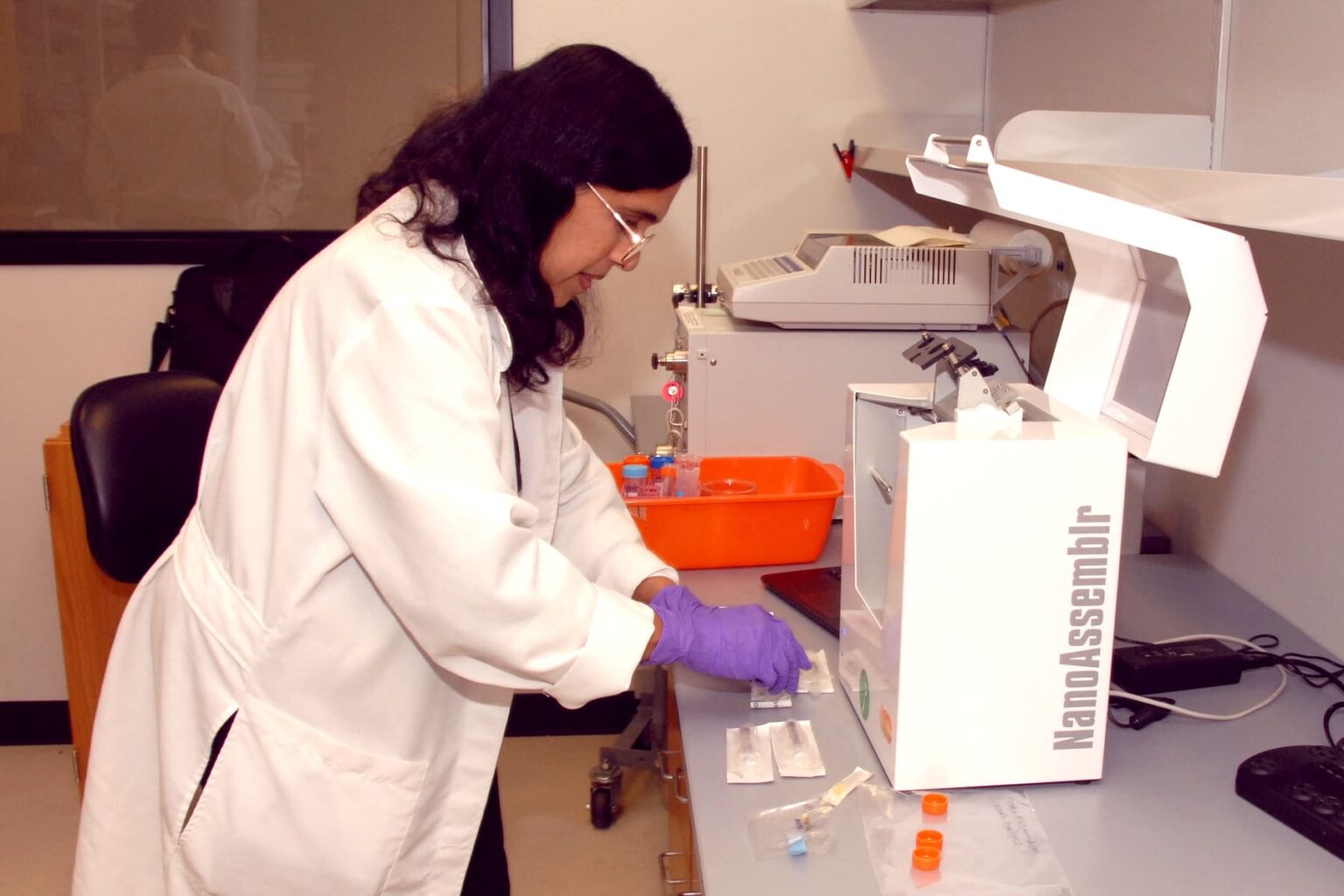
sarcoma cancer research at Rutledge Cancer Foundation

Getting to the Heart of the Matter

When Carley learned that her cancer had returned, she desperately wanted a better treatment than more chemo and radiation. She asked her mother to find something, anything other than more chemo and radiation – immune compromising and debilitating treatment that would keep her from going to college and living a normal life. Luckily, Laura found an immunotherapy vaccine trial that helped her body fight the Ewing sarcoma for eight years and live a fulfilled college and post college life.

Unfortunately, the cancer returned in 2020, and Carley passed away at 27, fueling the drive more than ever, to find a curative and less toxic sarcoma treatment.

Powering a Breakthrough in Ewing Sarcoma Research

In a historic milestone, we have come together with four other family-led nonprofit organizations, each who has lost a child to Ewing sarcoma, to fund a three-year $1.5 million grant. 

This is a first of its kind research collaboration.

Together, alongside the Sam Day Foundation, Alan B. Slifka Foundation, Shohet Family Fund for Ewing Sarcoma Research and the Faris Foundation, RCF is funding a three-year $1.5 million research collaboration dedicated to finding better treatments—and ultimately, a cure—for the most difficult Ewing sarcoma cases, those that have either spread or returned.

Funding Guidelines

Our Research Advisory Team focuses on identifying promising research and new drug developments for pediatric sarcomas that are advancing toward FDA approval and clinical trials. 

When selecting projects, we look for three key factors: (1) the treatment must be less toxic and tailored to the individual (2) it must target cancer cells while protecting healthy tissues and organs, and (3) it must boost the immune system to help the body fight the cancer.

Current Research Projects

A Parent-Led Milestone in Pediatric Cancer Research: the ACES Award

Rutledge Cancer Foundation has joined forces with four other family led organizations, each founded by a mother who has lost a child to Ewing sarcoma in a first ever collaboration to fund a three-year $1.3 million Ewing Sarcoma grant.

Those foundations include: Sam Day Foundation, The Faris Foundation, The Shohet Family Fund for Ewing Sarcoma Research and Alan B. Slifka Foundation.

The ACES award will be overseen and administered by the St. Baldrick’s Foundation Strategic Research Partnership Program, but the grant is fully funded and driven by five family-led organizations.

The Advancing Cures for Ewing Sarcoma (ACES) grant was awarded to Brian Ladle, a pediatric oncologist and immunotherapy expert at Johns Hopkins University, who will be working, in collaboration with the National Cancer Institute, to create a vaccine using the body’s own immune system to treat the most difficult cases of Ewing sarcoma, those that have either spread or returned.

The goal is for the vaccine to train the immune system to only identify, attack, and remember Ewing sarcoma cells. While the concept for this vaccine is not new, Dr. Ladle and his team, in collaboration with the National Cancer Institute, have identified more advanced and targeted methods for further isolating the unique markers found on Ewing tumors. 

They are also testing next-generation immunotherapies, including immune checkpoint inhibitors that help the immune system fight cancer more effectively.

More information can be found here. 

PEEL-224 is a targeted type of chemotherapy called topoisomerase (TOP1 inhibitor). It’s a type of nano-medicine, meaning that it’s a more targeted therapy where tiny particles carry the drug directly to the tumor. The current research being done on PEEL-224 is to hopefully prove that it’s an effective treatment for adolescents and young adults with relapsed sarcomas. 

In the mouse studies that were performed, PEEL-224 was shown to have fewer side effects and increased survival rates than another TOP1, irinotecan, a current and widely used chemotherapy drug. Another benefit is that treatment is given just once a week, meaning less risk of resistance and less toxicity, compared to irinotecan, a popular chemotherapy drug, that requires treatment five times a week. 

PEEL-224 is now being offered in a clinical trial alongside two other chemotherapy drugs—vincristine and temozolomide—in a combination called V(P)T. 

Patients will receive IV treatments just twice during each three-week cycle. Compared to current treatment regimens, this could cut the number of clinic visits dramatically—from around 80 to just 16 over six months.

This trial is currently being offered at Dana Farger and Children’s Hospital of Philadelphia. We are currently working on funding to bring this clinical trial to M.D. Anderson. 

This study, being conducted at MD Anderson, is focused on a sarcoma treatment using attIL12-T cell therapy. This therapy is designed to boost the immune system’s ability to attack the tumor directly within its environment (the tumor microenvironment) while minimizing harmful side effects on the rest of the body.

The therapy is built upon previous successful experiments using a similar treatment called tumor-targeted IL12 therapy, but it aims to address issues such as harmful side effects and limited effectiveness when treating larger tumors.

We are funding the Phase I clinical trial to test attIL12-T cell therapy for patients with advanced or metastatic soft tissue and bone sarcomas. Since this is the first time the therapy is being tested in humans, the goal is to assess its safety, identify the highest dose that can be given without serious side effects, and determine the optimal dose to use in the next phase of testing (Phase II).

Phase 1 of the trial is conducted in two parts:

Part A: Dose Finding

The study will test up to six different doses of the treatment. The doses will be evaluated using a method called Bayesian optimal interval design, a statistical approach that helps determine the most effective dose with the least risk of side effects.

Part B: Expansion

The efficacy of the treatment will be assessed in 10 additional patients with osteosarcoma treated at the recommended Phase II dose.

They are currently recruiting candidates for the clinical trial. Click here for more information to see if you qualify.

We are supporting Phase II of a clinical trial being conducted at MD Anderson focused on the efficacy and the safety Zanzalitinib.

Zanzalitinib is a new type of cancer treatment for adolescents and young adults with advanced or metastatic bone sarcomas, including osteosarcoma, Ewing sarcoma, chondrosarcoma, and other bone sarcomas. The medication is taken orally and specifically targets particular molecules within cancer cells, aiming to disrupt their growth and spread.

The goals of the trial are:

  • Evaluate the progression-free survival rate, a measure of how long the treatment can keep a patient’s cancer from getting worse, once they start taking the medication.
  • Conduct research to better understand how Zanzalitinib works at the molecular level and how specific biomarkers (indicators in the body that can predict disease progression or response to treatment) influence its effects. This information will help guide the proper use of this treatment, potentially improving its effectiveness and targeting the right patients.
  • Provide a new treatment option for patients with a poor prognosis caused by locally advanced, unresectable, or metastatic bone sarcomas.

With our funding support, Dr. Paul Sorenson and his research team at the British Columbia Cancer Research Centre are working to improve immunotherapy treatments for Ewing sarcoma. Initially, they used several strategies to enhance the targeting of IL1RAP, a key protein involved in the spread of Ewing sarcoma.

Results showed that IL1RAP antibody-drug conjugates (ADCs), a type of targeted therapy that combines antibodies and chemotherapy drugs to treat cancers and other diseases, proved to be the most effective option in mice, with minimal side effects.

Multiple testing methods have of this treatment have been conducted, including:

  • In Vitro Testing: Researchers tested the effectiveness (IC50) of IL1RAP-ADC on cancer cell lines from a mouse model. While the therapy was less effective on these mouse cells compared to human Ewing sarcoma cells, it still showed potential, as the IC50 was in the nanomolar range, indicating targeted therapy efficiency.
  • In Vivo Experimentation: The team conducted an experiment with syngeneic (genetically identical) sarcoma tumors in mice. Initial results showed that a low dose of IL1RAP-ADC did not prevent tumor growth. When they increased the dose, the therapy significantly reduced tumor size compared to untreated mice.
  • Patient-Derived Xenografts (PDX): They received patient-derived tumor samples and implanted them into mice (NSG and Nude mice). Early results showed that two PDX successfully grew in NSG mice, and the researchers are now testing how well these tumors respond to IL1RAP-ADC.

The next steps are discussing clinical trial options for Ewing sarcoma patients while continuing to develop alternative approaches.

RCF Research Partners

Bridging the Gap

In addition to supporting current research projects and clinical trials, Rutledge Cancer Foundation (RCF) is focused on improving efficiencies in the research and biotech communities by bringing together researchers, medical institutions and pharmaceutical companies to work together and more effectively to bring novel therapies to patients more quickly.

Cancer Researches

Help RCF Make a Difference for AYA's Living with Cancer

Ease the Impact

We fund patient programs that address unmet emotional and physical needs.

Raise Survival Rates

We work as a catalyst to increase awareness and early detection.

Find a Cure

We support research for less toxic, personalized cancer therapies.

Search Our Website